Recovery · 8 min read
Bitcoin transaction stuck? How to speed it up — and what it means for a swap
Why a Bitcoin transaction sits unconfirmed, today’s fee rates, and the ways out — Replace-By-Fee, Child-Pays-For-Parent or waiting — step by step.
 By Swaponym
Published
By Swaponym
Published
01Why a Bitcoin transaction gets stuck
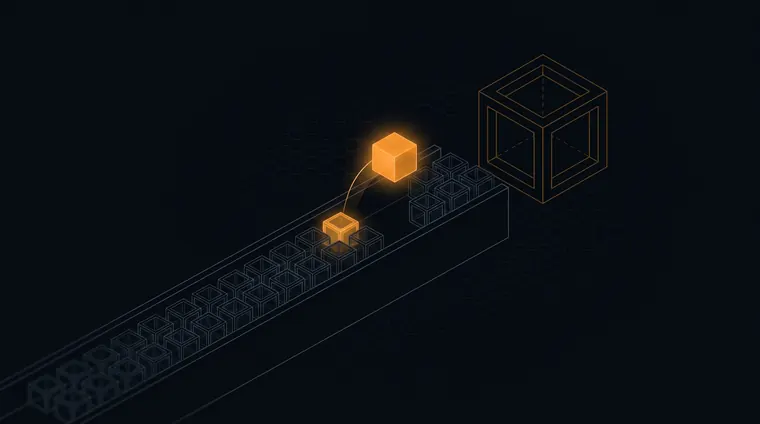
A Bitcoin transaction is not delivered to the recipient: it is broadcast to the network and waits in the mempool, the queue of transactions no miner has put in a block yet. A block comes about every ten minutes and holds a fixed amount of data, so miners take the transactions that pay the most per byte first. One whose fee rate is below what the queue is paying simply waits. It is not failing and it is not lost — it is unconfirmed.
The usual reasons: a fee chosen in a quiet hour, just before a busy one; an “economy” setting; or a transaction bigger than usual because it spends many small inputs — the fee is priced per byte, not per bitcoin.
| To confirm | Rate | Typical send (141 vB) |
|---|---|---|
| In the next block | 2 sat/vB | 281 sats$0.23 |
| Within 30 minutes | 1 sat/vB | 141 sats$0.12 |
| Within an hour | 1 sat/vB | 141 sats$0.12 |
| Economy — hours, a day when busy | 1 sat/vB | 141 sats$0.12 |
Read at 17:11 UTC from mempool.space. If your transaction pays clearly less than the one-hour rate, expect to wait — or use one of the fixes below.
02First, find out where it stands
- Copy the transaction ID Your wallet’s history shows it on the pending payment: the txid, a string of 64 letters and digits.
- Look it up in a block explorer mempool.space or any other. Three facts matter: the fee rate it pays in sat/vB, whether it is still waiting, and whether it is marked as replaceable.
- Compare its rate with the table above A little short in a quiet hour: it will probably confirm soon. Far below the one-hour rate: act.
If no explorer finds it, the transaction was never broadcast or has already been dropped — your coins have not moved. Skip to waiting it out.
03Fix 1 — Replace-By-Fee
Replace-By-Fee (RBF) sends the same payment again with a higher fee. Both versions spend the same coins, so only one can ever confirm — and miners take the one that pays better. The recipient and the amount stay the same; the extra fee comes out of your change.
Since Bitcoin Core 28 (October 2024), nodes accept a replacement by default even when the original did not announce itself as replaceable. In practice almost any unconfirmed transaction can be bumped — provided your wallet offers it: look for “Bump fee”, “Increase fee” or “Speed up” on the pending transaction.
- Open the pending transaction In the wallet that sent it: only that wallet holds the keys to the coins it spends.
- Choose “Bump fee” and set the new rate At least 1 sat/vB right now to confirm within half an hour.
- Confirm The replacement gets a new transaction ID, and the old one disappears from explorers.
The rule the wallet applies for you: the replacement must pay more than the original, in total and per byte. Custodial apps and some mobile wallets have no bump button — then go to Fix 2.
04Fix 2 — Child-Pays-For-Parent
Child-Pays-For-Parent (CPFP) works from the other end. You spend an output of the stuck transaction — usually your own change — in a new transaction with a generous fee. A miner can only collect that fee by including the parent too, so it weighs the two as one package and takes them together.
The child pays for both. With today’s numbers: a typical parent of 141 vB that paid 1 sat/vB (141 sats) needs, to reach the next-block rate of 2 sat/vB as a pair, a 110 vB child paying 360 sats — 3.3 sat/vB on its own.
Wallets with coin control — Sparrow, Electrum, Bitcoin Core — let you pick the unconfirmed change output and send it back to yourself with that fee. The recipient of a payment can do the same with the output they received: it is how a payment you are waiting for gets accelerated.
05Fix 3 — wait, and what happens if it drops
Doing nothing is a legitimate choice. Fees fall in quieter hours — nights and weekends in the busiest time zones — and a transaction paying at least the economy rate usually confirms within a day.
If it pays too little for too long, nodes eventually drop it: by default after two weeks in the mempool, sooner when the mempool fills up and it sits at the bottom. The coins were never spent. Once the network has forgotten the transaction, your wallet can spend them again — some wallets ask you to “abandon” or “cancel” the pending transaction first.
Never send the same payment twice while the first is pending. If both confirm, you have paid twice — and on a swap, only the first deposit is matched to the order.
06If it was a swap deposit
A swap on this desk pays out once your deposit is confirmed, so a stuck deposit holds up the payout: the order page keeps showing “confirming” until the network is done. What happens next depends on the rate type:
- Floating rate: nothing expires. The rate is taken when the deposit confirms, so the amount you receive follows the market during the wait — up or down.
- Fixed rate: the locked price has a deadline. A deposit that confirms after it is not exchanged at the old price: it goes back to the refund address on the order, minus the network fee. Bumping the fee is how you make the deadline.
A bump does not confuse the order: the deposit address still receives the same amount, whatever the transaction ID. Next time, pay at least the one-hour rate on a swap deposit — the Bitcoin fee calculator shows what that costs right now, and fixed or floating explains the deadline.
07Questions people ask
How long can a Bitcoin transaction stay unconfirmed?
As long as nodes keep it: by default up to two weeks in the mempool, less when the mempool is full and it pays one of the lowest rates. A transaction paying at least the economy rate usually confirms within a day.
Can I cancel an unconfirmed Bitcoin transaction?
Only by replacing it. With Replace-By-Fee a wallet can send the same coins back to yourself with a higher fee; if that version confirms first, the payment never happens. Once a transaction has one confirmation, it can no longer be changed.
Will I lose my bitcoin if it never confirms?
No. An unconfirmed transaction moves nothing. If it is dropped, the coins stay where they were and your wallet can spend them again.
Can the receiver speed up my transaction?
Yes, with Child-Pays-For-Parent on the output they received. Services that receive thousands of deposits — this desk included — do not do it for individual deposits, so on a swap the fix is on the sending side.
What fee should I pay for a swap deposit?
At least the one-hour rate: 1 sat/vB right now, about 141 sats for a typical send. More if the order has a fixed rate and its countdown is short.
Spotted something out of date? Tell us — the live figures refresh by themselves, the sentences around them are maintained by hand.